Exploring the Richness of Culture and Technology

Unlocking Europe’s Digital Bookshelves: The Fight for Our Right to eRead

Libraries have always been society’s great equalisers—gateways to knowledge, culture, and opportunity, open to everyone. But as the world moves from print to pixels, the fundamental ability of libraries to own and lend books is under threat. This isn’t just an inconvenience; it’s a direct challenge to our collective right to access digital materials, the third core principle of the Our Future Memory campaign supported by Internet Archive Europe.

Two recent publications shed crucial light on this struggle, mapping out both the problem and the path forward for memory institutions across Europe.

From Ownership to Expensive, Temporary Access

The core of the problem is a seismic shift in how we access digital content. As a recent COMMUNIA policy paper highlights, publishers are increasingly moving away from selling digital materials and are instead offering restrictive licenses. For libraries, this means they can no longer simply buy a book and own it forever. Instead, they’re trapped in a cycle of temporary, rental-like agreements that give publishers unprecedented control.

The consequences are stark. Libraries face exorbitant prices, “take it or leave it” subscription bundles filled with titles they don’t need, and terms that can forbid preservation, accessibility services, or inter-library loans. In some cases, publishers can even refuse to license essential e-books altogether, effectively creating gaps on our shared digital shelves. This reliance on licensing, a comprehensive study on e-lending in Europe by Knowledge Rights 21 concludes, “undermines the societal role of libraries by limiting their operational capabilities” and compromises fundamental user rights like privacy.

A Path Forward: Secure Digital Lending and the Right to License

So, what’s the solution? The Knowledge Rights 21 study offers a powerful, legally grounded model: (independent) Secure Digital Lending ((i)SDL)

This model is simple and fair: if a library legally owns a physical copy of a book, it should have the right to digitise it and lend out that single digital copy to one user at a time. This “one copy, one user” system mirrors traditional library lending and provides a vital backstop when publishers refuse to offer fair licensing terms. The study compellingly argues that this model is permissible under existing EU law, offering a clear path for libraries to reclaim their autonomy in the digital age.

The COMMUNIA policy paper builds on this by calling for broader legislative change. It argues that because access is a prerequisite for exercising rights like education and research, users need an enforceable “ancillary access right”. For libraries, this means an obligation on publishers to facilitate access through fair and reasonable licenses. Critically, any licensing terms that prevent a library from fulfilling its public mission—such as by charging unfair prices or restricting lawful uses—should be unenforceable.

Join the Conversation

To dive deeper into these critical issues, join the upcoming COMMUNIA Salon on “The Right to E-Lend.” This online event will be moderated by Peter Routhier from the Internet Archive and will feature experts discussing the challenges and solutions outlined in these essential reports. It’s a perfect opportunity to engage with the community and explore how we can collectively build a better digital future for our libraries.

Stand for Our Future Memory

Both of these reports arrive at the same conclusion: the current system is failing our libraries and, by extension, all of us. Securing the right to access, own, and lend digital materials is not a niche issue: it’s essential for ensuring that knowledge remains a public good, not a private, pay-per-view commodity.

This is precisely what the third right of the Our Future Memory campaign is all about. The ability of our memory institutions to build and preserve digital collections for future generations depends on our ability to act now.

The digital transformation of knowledge will continue regardless of whether memory institutions effectively advocate for their needs.

If your institution believes in a future where digital knowledge is owned, preserved, and accessible to all, it’s not too late to show your support. Join the growing list of signatories and stand with us.

Sign the statement at: www.ourfuturememory.org

Unlocking Europe’s Digital Bookshelves: The Fight for Our Right to eRead Read Post »

Preserving Digital Sovereignty: Marleen Stikker & Brewster Kahle at the KB in The Hague on 17 September

Exploring the Urgency of Web Archiving in the Netherlands

In an era where websites disappear and change at a rapid pace, safeguarding our digital cultural heritage has never been more urgent. On Wednesday 17 September, the KB – National Library of the Netherlands in The Hague will host a timely event featuring Marleen Stikker, internet pioneer and founder of Waag Futurelab, and Brewster Kahle, founder of the Internet Archive and Internet Archive Europe.

This gathering will focus on the need for robust web archiving in the Netherlands. Despite efforts by Dutch institutions like the KB, the Netherlands Institute for Sound and Vision, and the National Archives, legal restrictions severely limit the ability to comprehensively preserve Dutch websites. As a result, vast portions of the Dutch digital memory risk being lost.

A Conversation on Collective Memory and Democratic Infrastructure

The event will spotlight how digital preservation supports historical awareness, collective memory, and a functioning democracy. Marleen Stikker will address why digital sovereignty matters in today’s political and cultural landscape, while Brewster Kahle will showcase the Internet Archive’s efforts to preserve the web globally since 1996—including new ways to explore archived websites and bring collections to life.

Their insights will be particularly valuable for policymakers, cultural heritage professionals, and digital preservation advocates. The discussion will be held in English.

Event Details

Date: Wednesday 17 September 2025
Time: 15:30–17:00, followed by a reception
Location: KB | National Library of the Netherlands, Prins Willem-Alexanderhof 5, 2595 BE The Hague
Language: English
Audience: Heritage sector professionals and advocates, policymakers, and invited guests

👉 Register here to attend the event and more info here.
(Note: Limited capacity; early registration recommended)

Preserving Digital Sovereignty: Marleen Stikker & Brewster Kahle at the KB in The Hague on 17 September Read Post »

Brewster Kahle at the Royal Danish Library in Copenhagen on 4 September

Digital librarian and founder of the Internet Archive, Brewster Kahle, will deliver a public lecture introducing Internet Archive Europe in Copenhagen on Thursday, September 4, 2025, from 13:00 to 14:15 CET. The event will take place at the Royal Danish Library, Karen Blixens Plads 7, Grand Lobby, Copenhagen.

📢 Register here to attend the event.

Brewster Kahle and Universal Access to All Knowledge

Brewster Kahle has dedicated his career to creating a digital library accessible to all, preserving over 145+ petabytes of data—including books, web pages, music, television, and software. The Internet Archive collaborates with 1,200+ library and university partners worldwide to safeguard cultural heritage and enhance public access to knowledge.

Internet Archive Europe, a Dutch foundation established in 2004, expands this mission of Universal Access to All Knowledge through partnerships with European libraries, museums, and archives, working to safeguard digital heritage for the long term. 

Introducing Internet Archive Europe to Denmark

As Internet Archive Europe deepens its collaborations across the continent, this lecture brings its mission into focus for a Danish audience. Brewster will share how collaborations can build a shared infrastructure for digital preservation across borders.

Key discussion topics will include:

  • Building partnerships between Internet Archive Europe and mission-aligned European cultural and research organisations.
  • Exploring how AI can be used to “bring collections to life” for researchers, patrons, and the public.
  • Addressing the unique opportunities and challenges of digital libraries in the European context.
  • Enhancing the accessibility and visibility of cultural heritage collections through collaborative innovation.

A Public Dialogue on the Future of Digital Memory

Co-hosted by DALOSS and Royal Danish Library, this event invites academics, librarians, policymakers, and the public to reflect on the challenges and opportunities facing Europe’s digital future.

📅 Event Details:
📍 Location: Royal Danish Library, Karen Blixens Plads 7, Grand Lobby, Copenhagen
🕓 Date & Time: Thursday, September 4, 2025 | 13:00 – 14:15 CET
🔗 Register here and check here for more information

 🗣️ Language: English 🇬🇧

This is a unique opportunity to engage in a forward-looking discussion on AI, open access, and cultural heritage with one of the leading voices in the field of digital preservation.

Brewster Kahle at the Royal Danish Library in Copenhagen on 4 September Read Post »

Strength in Numbers: IFLA Joins Our Future Memory + Future Knowledge Podcast Episode

Building on the momentum of our Our Future Memory campaign, we’re thrilled to share two major developments:

🌍 IFLA Joins the Statement

This week, the International Federation of Library Associations and Institutions (IFLA) formally endorsed the Four Rights for Memory Institutions statement, further uniting libraries, archives, and museums worldwide behind the call to:

  • Collect digital materials
  • Preserve digital collections
  • Provide controlled digital access
  • Cooperate across institutions

With IFLA’s global reach—representing over 1.5 million library professionals across more than 150 countries—this endorsement underscores the universal urgency of protecting cultural heritage in the digital age.

🎙️ “Future Knowledge” Podcast Episode

To dive deeper into what this global alignment means in practice, Internet Archive has released a special episode of the Future Knowledge podcast featuring voices from across our movement:

Together, they reflect on the rapid growth of our campaign—from its launch in Aruba through widespread European and global sign-ons—and explore concrete next steps for policymakers, memory institutions, and library advocates worldwide.

💬 Voices from the Movement

📚 Libraries in the Digital Age: Keep the Rights, Evolve the Tools

Brewster Kahle issued a powerful reminder that the mission of libraries doesn’t change just because the medium does:

“We should not lose rights that we had in the physical world as we move digital. It should be a better future.”

“What libraries have always done—preserve, lend, interoperate—is now being challenged.”

He emphasized that in the face of licensing restrictions and eroding control, the very identity of libraries is at stake.

🧰 Let Libraries Be Libraries

Lila Bailey recounted the genesis of the four digital rights and how librarians globally came together in a moment of existential reflection:

“Everybody deserves access to high quality information that libraries and other memory institutions have been collecting for generations.”

She reminded listeners why the call to action is urgent:

“Winter is coming…Winter’s kind of here when we’re thinking about access to information.”

🇷🇸 From Belgrade to the World: A Simple Document, a Global Movement

Adam Sofronijević shared the emotional core of the campaign:

“Let this world not be our doom, but our hope. By preserving our rights… we will be able to expand all those beautiful things that digital tools are promising us.”

“When winter comes, the temperature falls down. What we can do is huddle together to give us more warmth.”

His message: the power of unity and simplicity in a world bracing for digital disruption.

🇪🇺 Digital Fairness for Libraries: A European Call to Action

Caroline De Cock called out the quiet crisis in how memory institutions are being hollowed out by licensing regimes:

“We are shifting to a model where [libraries] are basically seeing their collections disappear. Like Snapchat stories.”

At the LIBER Conference, she found a community ready to act:

“Memory institutions are facing a situation that has never been more critical in terms of being able to fulfill their mission in the future.”

And she pointed to Europe’s unique role in protecting digital rights:

“Europe has a tradition of trying to protect the little guy. We are into that—that’s our thing.”

📖 The Global Voice of Libraries

Stephen Wyber spoke to the power of collective voice and institutional alignment in the face of digital challenges and the nearly hundred year of IFLA advocacy on these matters:

“What we’ve really seen is a deregulation by stealth: quietly, little bit by bit, all of the protections, all of the balancing factors that were in place have been undermined.”

“The importance of talking about rights: (…) things that are as important as the preservation of our history, access to information for accountability for reproducibility, when we’re talking about access for research, for education, it’s crazy that we should call these exceptions. These should be the rule!”.

🌴 Preserving a Nation’s Memory—Digitally

Peter Scholing reflected on the foundational partnership that launched the campaign and why small nations play a big role in preserving digital heritage:

“There’s a shared purpose in getting the information you want to share out there, and there’s a lot of barriers to information (…) So it’s just our way of contributing to that conversation and sharing with worlds that we’re about sharing the information.”

Raymond Hernandez added:

“By putting this together in the collection, we can make it possible not only for us Arubians to get this information but also for all our diaspora living around the world. (…) the signing was a kind of expression that it is not only about cultural equity but also about making sure our communities are not left out of the digital future.”

🌍 What’s Next: From Signing to Sustaining a Movement

Closing thoughts from Adam and Caroline made it clear: this isn’t just a petition. It’s a catalyst.

“This campaign is a merger of the best America and Europe can provide to each other.”

Adam Sofronijević

“This is not just signing a statement. I’m hoping this is kick-starting a movement.”

Caroline De Cock

📢 Join the Movement

▶️ Listen now on your favorite podcast platform to hear firsthand how these leaders plan to translate collective commitment into legal protections and community action.

Stay tuned for more updates—and if your institution hasn’t signed yet, visit ourfuturememory.org to add your voice.

We’re stronger together, and the future of our shared memory depends on it.
Strength in Numbers: IFLA Joins Our Future Memory + Future Knowledge Podcast Episode Read Post »

Celebrate European Public Domain Day 2026

📅 Date: September 30, 2025 – Call for Contributions Deadline
📅 Date: January 15, 2026 – European Public Domain Day 2026
📍 Location: Royal Library of Belgium, in Brussels
🔗 Call For Contributions Form 

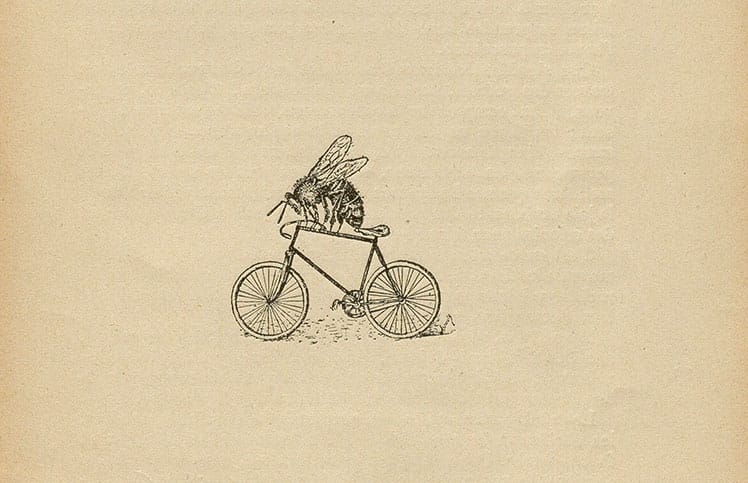
A bee on a bicycle, drawing from “Le calendrier de l’apiculteur”, C. Arnould, 1908.

European Public Domain Day: Call to Contributions 

We are thrilled to announce the opening of the Call for Contributions for the European Public Domain Day 2026! 

On the 15th of January 2026, we will celebrate the Public Domain Day at the Royal Library of Belgium, in Brussels. Together with Scholars, Advocates, Policy-Makers and Practitioners, we look at the Public Domain, and how we collectively can continue to protect it. 

The European Public Domain Day is a conference co-organised by COMMUNIA, Meemoo, Wikimedia Europe, Wikimedia Belgium, Europeana Foundation, Creative Commons, Internet Archive Europe, CREATE, the Royal Library of Belgium and Open Nederland & by the Community Members.

For the first time, the alliance has opened a Call for Contributions aimed at Professionals of the Cultural Heritage Institutions and Advocates to contribute to this day! We want to hear new voices, discover new topics and have a better representation of the activities all over Europe through lightning talks & presentations. This call only applies to the European Track for the afternoon sessions. 

Could this be you? Propose your lightning talks or presentations via this form

The Call to Contributions is open until September 30th 2025. 

If you have any questions, please, contact Camille Françoise 

🧭 Why This Matters

The European Public Domain Day 2026 is a crucial event for celebrating and advocating the Public Domain, by fostering creativity and access to knowledge. Uniting scholars, advocates, and policy-makers, this event aims to enhance efforts to protect and promote the Public Domain across Europe. The Call for Contributions invites professionals to celebrate and protect the Public Domain.

Celebrate European Public Domain Day 2026 Read Post »

AI for Public Good @PublicSpaces: From Hype to Humanity

Forget the dystopias and sci-fi. At this panel, the message was clear: AI, when done right, can serve people, not just profits.

“AI is applied statistics on steroids… with a serious marketing spin,” quipped Caroline de Cock, setting the tone for a no-nonsense, myth-busting panel on how AI can serve sustainability, culture, and society. She urged the audience to ditch the Silicon Valley glitz and look at AI like the Dutch polder model: “No one really knows how it works, but the dykes hold, and our feet stay dry.”

🔍 What Happens When Archives Meet Algorithms?

Jeff Ubois from the Internet Archive Europe Board delivered a wake-up call: the previously overlooked corners of digital preservation are now prime real estate for AI training.

“Archives have become relevant, not so much to humans, but to AI.”

He warned about the erasure of inconvenient data—climate, health, economic—being flushed down “Orwell’s memory hole,” while stressing the need for broad access to high-quality information to train AI in the public interest.

“Do you want your doctor’s AI trained on all human medical knowledge, or just what’s fully licensed and easy to access?”

🏗️ Build Public, Not Just Private AI

Ben Cerveny from the Foundation for Public Code flipped the narrative from tech disruption to tech integration. In his words:

“People invent things and call them technology. If they work, they become infrastructure.”

Ben’s vision? A future where cities, libraries, and schools have their own public models: transparent, accountable, and locally tuned.

“A public model should be a public asset—with governance, values, and sustainable funding baked in.”

Dr. Lucie Chateau speaks at AI for Public Good Panel – PublicSpaces Conference 2025: Shaping Our Digital Future – Photo by Lotte Dale

🌍 The Global Majority Needs a Seat at the Table

Dr. Lucie Chateau from Utrecht University’s Inclusive AI Lab stressed the importance of looking beyond Western AI narratives.

“90% of young people live in the Global South. They’re not just data points. They’re creators.”

She introduced groundbreaking work in building regional language models and ethnographic research showing how AI is being joyfully and creatively adopted across India and Africa.

🌱 Climate GPT: AI vs. Our Biggest Crisis

Then came Daniel Erasmus, who cut through AI hysteria with a clear call to arms:

“The peril isn’t AI. It’s climate change.”

He showcased ClimateGPT, a lightweight, renewable-powered model trained to help tackle climate adaptation and resilience. It’s already being used for everything from judging sustainability awards to helping map the impact of extreme weather in real-time.

“We don’t need smarter things. We need better decisions.”

💡 Takeaways

  • Archives matter not just for memory, but for justice and data equity.
  • Europe must build public AI infrastructure, not just regulate private ones.
  • Inclusion means participation: AI from and for the Global South is essential.
  • Climate tech can’t wait, and smaller, focused models are more sustainable and actionable.
  • System prompts = ethics by design: who should decide what your AI thinks?

As one audience member asked, could we one day replace politicians with AI trained on party manifestos?

“No,” came the quick answer. “But we can use AI to make better, more informed decisions.”

That’s the future this panel believes in: grounded, democratic, and just smart enough.

Check out the full recording of the panel here: https://conference.publicspaces.net/session/ai-for-the-public-good

The photo’s of the conference are online now on https://publicspaces.net/2025/06/25/fotos-van-de-publicspaces-conferentie-2025-shaping-our-digital-future/

AI for Public Good @PublicSpaces: From Hype to Humanity Read Post »

Scroll to Top