On Friday, 13 March, Internet Archive Europe welcomes MIT’s Peter Kaufman to our Amsterdam HQ for a conversation about the medium that now carries most of human knowledge: video.
Event details 📅 Date: Friday, 13 March ⏰ Time: 3:00 – 5:00 PM CET 📍 Location: Internet Archive Europe, Oudeschans 16, 1011 KZ Amsterdam 🎟 Registration: Required via Luma
The event is free and open to anyone working in publishing, education, libraries, archives, or simply curious about where the moving image is taking us next.
Why video, and why now
Two-thirds of the world’s internet traffic is video. Americans get their news and information from screens and speakers more than through any other means. And yet, for most writers, educators, publishers, and archivists, video remains something of a foreign country: present everywhere, understood unevenly, and preserved poorly.
Kaufman’s new book, The Moving Image (MIT Press), is the first authoritative account of how we arrived here, and the first practical manual for those who want to navigate the medium with confidence. Drawing on decades as an educator, publisher, and producer, Kaufman covers the full lifecycle of video: how to produce it, distribute it, clear rights to it, cite it, and, crucially, archive and preserve it. And in a gesture entirely consistent with its argument, the book is now available as an open-access edition under a CC BY-SA licence, released with support from MIT Libraries exactly one year after its original publication. You can read it here.
What the afternoon covers
The book ranges across politics, law, education, and entertainment, tracing video’s role in public life 130 years since the birth of film. Kaufman offers detailed guidance on finding and using archival footage, securing rights and permissions, developing distribution strategies, and addressing the preservation and storage questions that libraries and archives know all too well.
For an organisation like Internet Archive Europe, that last part matters enormously. Preservation is not a technical afterthought: it is the condition under which access to moving image culture becomes possible at all.
Modelled in part on Strunk and White’s The Elements of Style, The Moving Image is, by all accounts, also a genuinely enjoyable read, which is not always what you get from a definitive manual.
About Peter B. Kaufman
Peter B. Kaufman is Associate Director of Development at MIT Open Learning and founder of Intelligent Television, a video production company that works with cultural and educational institutions around the world. He is also the author of The New Enlightenment and the Fight to Free Knowledge, making this latest book a natural continuation of a career spent arguing that knowledge, in whatever form it takes, belongs in the commons.
Internet Archive Europe is proud to support the release of AI Lab Perspectives: Humans of AI, the seventh report by information labs, based on a series of expert video capsules.
This timely and thoughtful publication brings together voices from across Europe’s cultural heritage ecosystem to explore a question that could not be more important: what does it mean to build AI that truly serves the public?
As the report’s introduction makes clear, Humans of AI aims to spark informed conversation and critical reflection on how artificial intelligence is being applied within the cultural heritage sector across Europe and beyond. Through in-depth podcast conversations with libraries, museums, archives, artists, researchers, and digital platforms, the series highlights real-world projects, ethical challenges, and practical lessons that demonstrate how AI can support access, memory, and public engagement.
At Internet Archive Europe, this mission resonates deeply.
AI as Public-Interest Infrastructure
Across all ten case studies, one shared insight stands out: AI is neither a miracle nor a threat; it is a tool. Its impact depends on how it is governed, who shapes it, and whether it strengthens public knowledge and democratic access.
The projects featured in the report illustrate this principle in powerful ways:
Preserving History: From Transkribus turning historical manuscripts into searchable text to the National Library of Norway building language models grounded in local culture.
Innovating Access: Projects like Litte_bot bring literary characters to life, while the Museum Goggles initiative uses AI to help us understand how visitors truly experience art.
Memory & Ethics: The Synthetic Memories project uses AI to reconstruct lost personal histories, and Europeana uses it to identify and contextualise contested colonial terms in metadata.
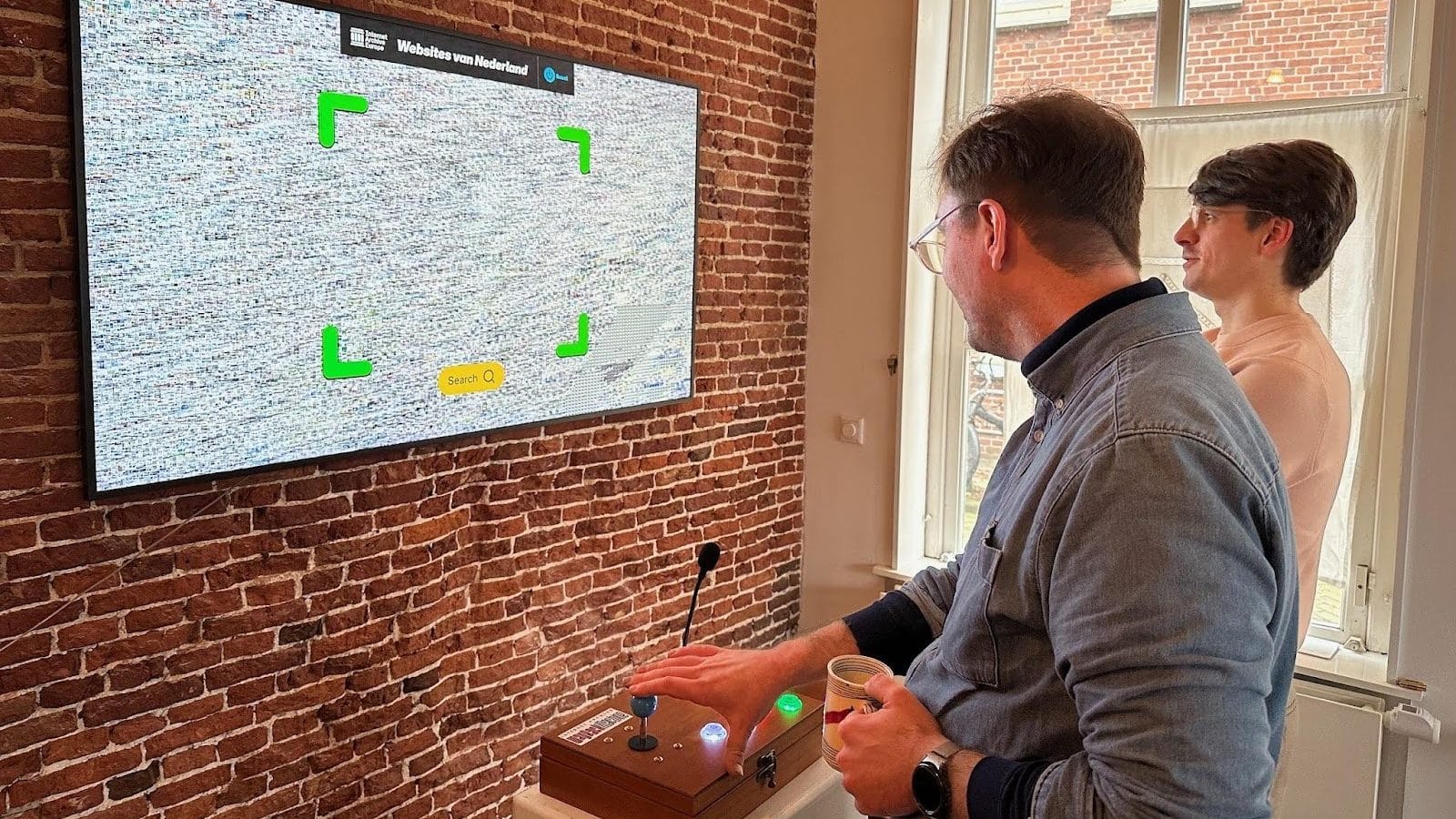
The Web of the Past: We are especially thrilled to see Kai Jauslin’s work on the Websites van Nederland project, part of the Webarchiving Display of the Internet Archive Europe. This initiative transforms massive web archives into interactive “fields of stars,” making born-digital heritage tangible and explorable for the public.
For us, the themes of openness, shared ownership, multilingual access, ethical governance, and human oversight are not abstract ideals. They are foundational principles. We believe that digital heritage, including the web itself, belongs to everyone. AI, when responsibly developed, can help ensure that these collections remain explorable, meaningful, and usable for generations to come.
Bringing Collections to Life — Responsibly
One of the most inspiring aspects of Humans of AI is its refusal to fall into hype or fear. The report consistently underscores that the real challenges around AI are social and institutional—adoption, governance, trust, and long-term sustainability—rather than purely technical.
From reconstructing lost memories through guided conversations to using AI-powered eye-tracking to better understand museum engagement to enriching metadata across millions of records, the report shows that AI’s greatest value lies in supporting human interpretation, not replacing it.
This aligns closely with Internet Archive Europe’s commitment to:
Preserving digital memory at scale
Supporting open data and open-source innovation
Making archives explorable, not hidden
Ensuring that public knowledge is not mediated exclusively through private platforms
AI can help bring collections to life, but only if it remains grounded in public interest, transparency, and shared stewardship.
Looking Ahead: The Second Series of Case Studies
We are especially proud to see the breadth and diversity of contributors in this first edition, from national libraries and global open-source communities to artists and experimental designers. The range of voices reflects the richness of Europe’s cultural and digital heritage ecosystem.
Internet Archive Europe looks forward with great anticipation to the second series of Humans of AI case studies. Continued documentation of practical, ethical, and public-interest applications of AI will be essential in shaping a European approach that is confident, values-driven, and collaborative.
By amplifying real-world examples rather than abstract speculation, this series provides policymakers, cultural institutions, and technologists with something invaluable: grounded insight.
How do researchers, journalists, and artists work with archived pages from the Internet Archive’s Wayback Machine? What kinds of tools, methods, and approaches do they use? What other kinds of tools might support critical and creative repurposing of archived web materials?
As web archives have come to play an increasingly important role in understanding, reporting on, and engaging with digital culture, there are opportunities for learning and sharing across these areas of practice.
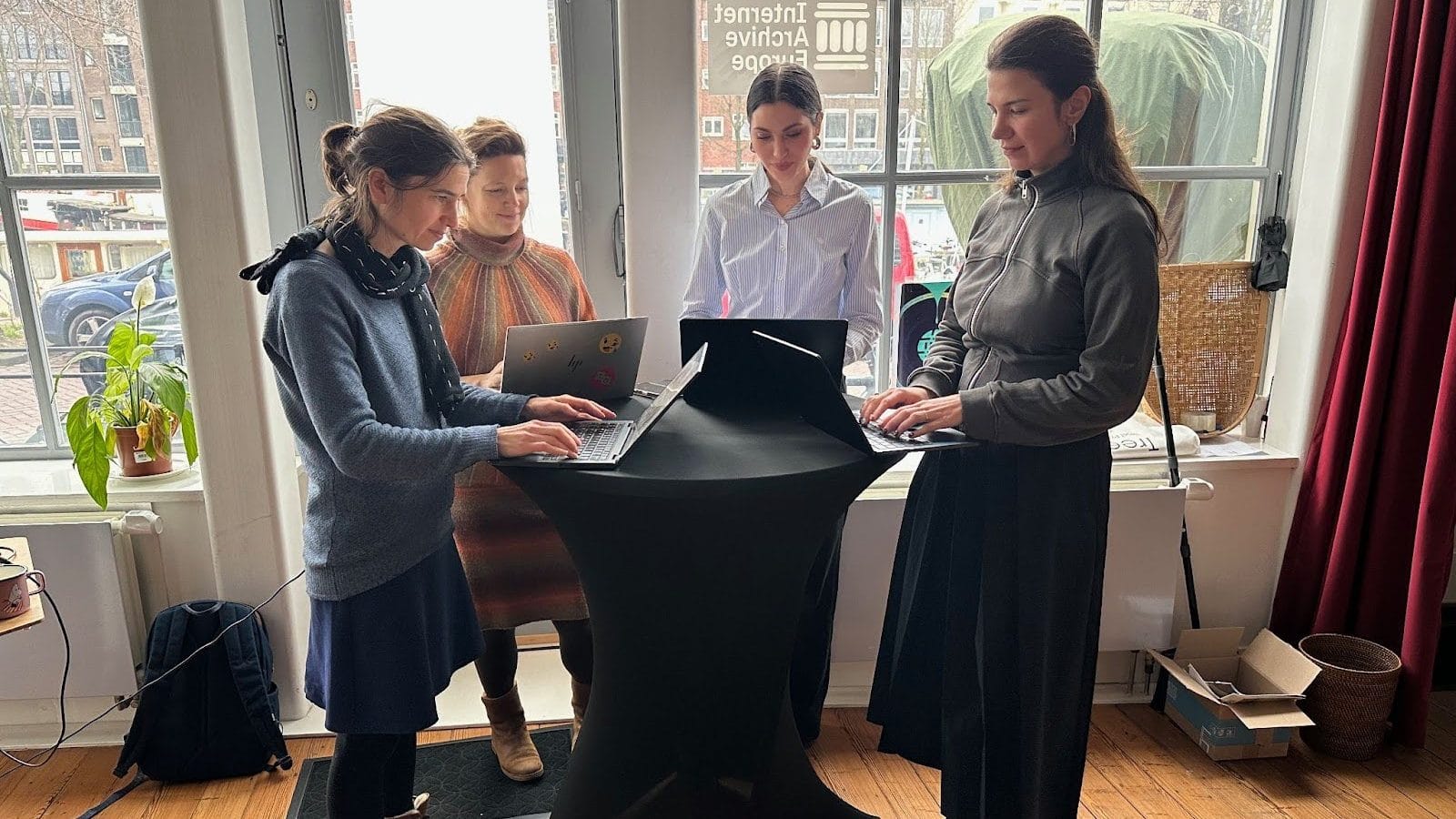
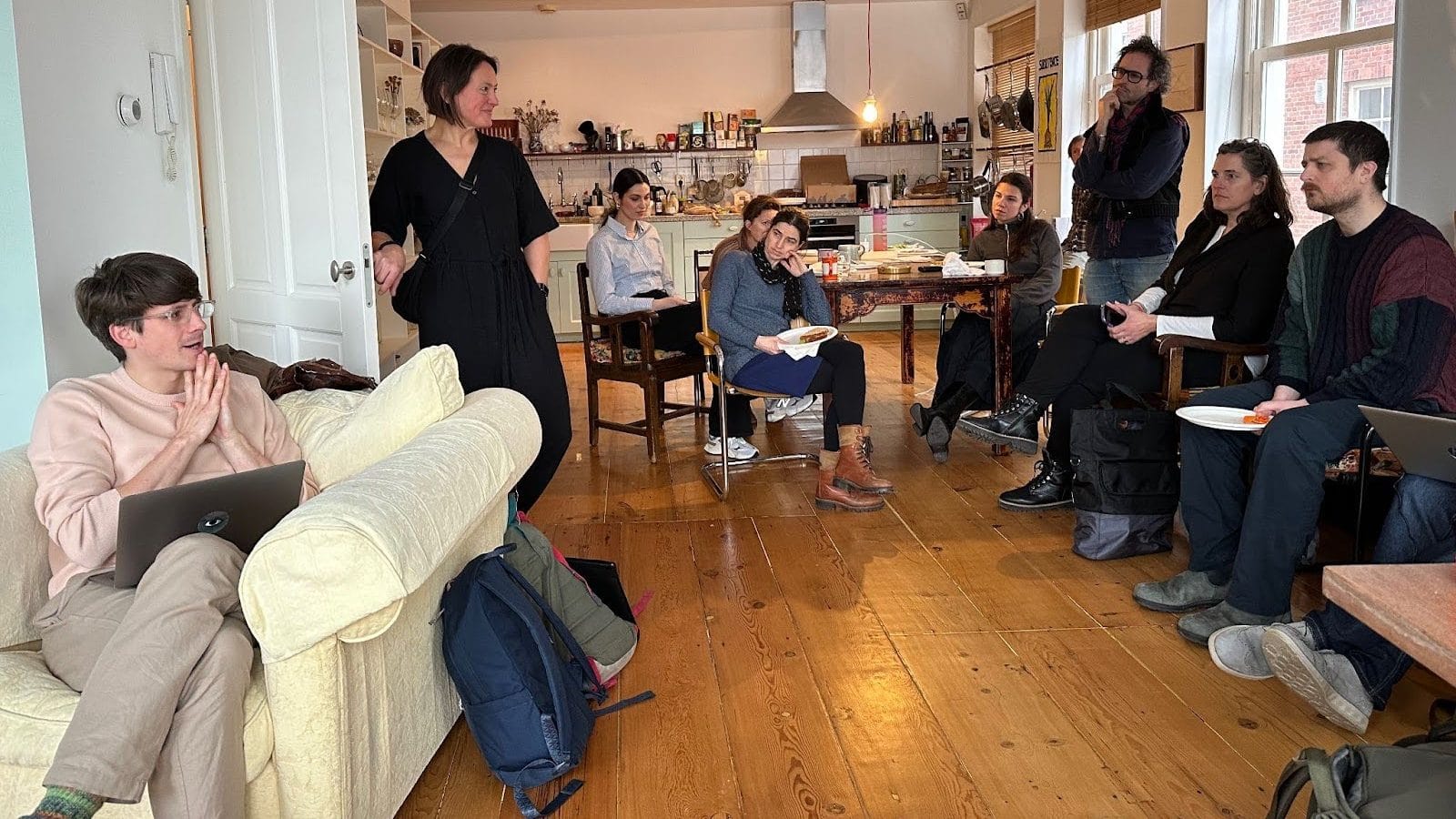
On 9 February, Internet researchers gathered at the Internet Archive Europe‘s space in Amsterdam to share different ways of working with the Wayback Machine. Many collaborate with journalists and media organisations on digital investigations. Some of us also have an artistic practice involving working with online materials.
How is the Wayback Machine used?
We split into pairs and small groups to review ways of working with web archives in our own research and teaching practices, as well as in digital investigations and media art.
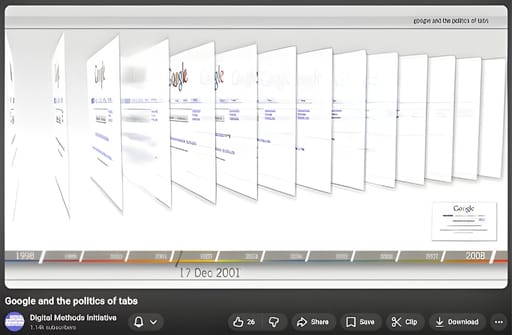
This approach to exploring archived pages through making screencast documentaries is written up in the Digital Methods and Doing Digital Methods books, which many of us use in our teaching.
We looked at some examples of how the Wayback Machine is used by artists and talked about how it can be used in the process, as well as the final pieces of media artists. It can be hard to find out about how artists use the Wayback Machine, as descriptions of work often do not mention or link to it. Idil, a researcher and artist, spoke about her subcultural nostalgia in revisiting vampirefreaks.com and how this might inspire her artistic practice.
We’d like to have further gatherings and events with journalists and artists to further understand how they work with the Wayback Machine and how we might learn from, collaborate with, and support each other.
How might we work with the Wayback Machine in the future?
After reviewing how the Wayback Machine has been used in our research and by various communities of practice, we considered how we might work with it in the future.
We spoke about the geographies of the Wayback Machine and how we might study things like the breadth, depth, and frequency of archiving different top-level domains—including to see which countries and regions might be under-represented in web archives, as well as reviewing what kinds of prominent websites might be missing.
Another thread was how we might contribute to the Wayback Machine as Internet researchers, for example, by adding a 4CAT feature to submit collections of URLs to the Wayback Machine, or by curating digital culture collections on the Internet Archive related to topics we’re working on (such as this collection of COVID-19 mobile apps).
We thought it could be interesting to support an ecology of archived materials that are shared in different ways, using tools such as ArchiveBox for locally hosted materials, and sharing curated subsets to the Internet Archive. We also discussed ways to query across multiple collections of archived materials, such as through the Memento aggregator.
We considered how social media posts are archived by the Wayback Machine and approaches to working with patchily archived materials. One idea was to look back at archived social media interfaces to reconstruct how posts looked at different moments in time.
What next?
In terms of next steps, we will continue to explore the threads above across our respective classes and projects. We’d also like to organise some co-learning and practice-sharing workshops with researchers, journalists, and artists – as well as having some speculative prototyping and tiny tool-making sessions to surface and seed other ways of working with the Wayback Machine.
If you’re interested in keeping in touch about these activities, we’ve set up a web-archives mailing list for researchers, educators, journalists and artists working with the Wayback Machine and other web archives.
We hope that growing connections across these communities of practice will contribute to critical and creative uses of web archives in years ahead.
Following the endorsement of IFLA, a leading global voice for libraries, we are especially proud to welcome its sister organisation, the International Council on Archives (ICA), as a new signatory to the Statement on the Four Digital Rights of Memory Institutions.
A copy of the Statement was formally signed by ICA President Josée Kirps. As the international representative body for archives and archivists worldwide, ICA’s support carries particular significance. In its endorsement, ICA emphasised the importance of protecting memory as a public good in an increasingly complex digital landscape:
“By signing this statement, the International Council on Archives reaffirms its commitment to protecting memory as a public good, including in digital environments. While much work remains—particularly regarding the ethical and legal dimensions of access to archival materials—this represents an important first step toward a more just and responsible digital future.”
Growing Support
In late 2025, SPARC added its name to the Statement, with Curationist following in early 2026, further expanding the coalition within the cultural heritage sector. Their participation marked the beginning of continued growth in 2026, as additional organisations joined the Our Future Memory movement, including Arkéotopia, Wellesley Free Library, and the Council of Prairie & Pacific University Libraries (COPPUL).
Together with ICA, these cultural heritage organisations demonstrate their understanding of the challenges the sector faces. These problems are emerging rapidly, and strong legal protections are required to ensure the continued preservation of and access to our cultural record.
Join the Movement
It is important to stress that no organisation is too small to adds its voice to our movement. The fact that an umbrella organisation signs does not mean that its individual members should refrain from doing so, as we want to ensure that the breadth of the sector is fully represented and visible to policymakers.
If you missed our recent informational webinar, “Protect Our Future Memory: Join the Call for Library Digital Rights,” you can still watch the session to learn more about the growing international movement to secure the digital rights memory institutions have long held in the physical world.
Upcoming Intervention on the campaign in a Knowledge Rights 21 Informational Webinar on 19 February 2026
Join the Internet Archive and partners a webinar on “Enabling Libraries, Guaranteeing Rights: A Legal Checklist for the Digital Age”
To explore the origins, urgency, and global significance of the Four Digital Rights, we encourage you to listen to the Future Knowledge podcast episode on this campaign. Featuring leaders from across the library, archive, and digital rights communities, the episode offers essential context on why these rights matter—and what’s at stake.
On 19 February 2026, I will be participating in Knowledge Rights 21’s webinar“Enabling Libraries, Guaranteeing Rights: A Legal Checklist for the Digital Age”. The event marks the launch of an important new publication: “Safeguard Access, Empower Europe – An Action Plan to Let Libraries be Libraries.”
I’m glad to be part of this conversation, because the issues at stake go to the very heart of what we are trying to protect through the Our Future Memory campaign: the ability of libraries to preserve, lend, and provide access to knowledge in the digital age — in the public interest.
Libraries at a Turning Point
Libraries have always played a crucial role in safeguarding cultural heritage, enabling access to knowledge, and supporting education, creativity, and research. Today, much of this work happens in digital environments. Yet the legal frameworks governing libraries have not kept pace with this reality.
Too often, libraries are expected to fulfil their public mission online without the legal certainty or rights they have long enjoyed offline. This creates a growing gap between what libraries should be able to do—preserve digital works, lend them, and make them accessible for research and learning—and what the law and market actually allows.
Recognition of the value of libraries is not enough. Libraries need legal guarantees that actively empower their work.
Connecting Law, Access, and Memory
At Internet Archive Europe, we see every day how legal choices shape what is preserved for future generations — and what is lost. This is why the Our Future Memory campaign exists: to highlight what is at stake when access to knowledge, cultural memory, and digital preservation are constrained by outdated or overly restrictive rules.
The campaign asks a simple but urgent question: What kind of memory do we want to leave to the future?
Libraries are central to the answer. But without clear legal frameworks that support digital preservation, lending, and access, our collective memory risks becoming fragmented, inaccessible, or dependent on purely commercial terms.
The 9-Point Action Plan
The webinar on 19 February will present Knowledge Rights 21’s 9-Point Action Plan, which offers a practical roadmap for lawmakers, advocates, and library professionals. It sets out the essential legal conditions that libraries need to operate effectively in the 21st century—online and offline.
During the session, we will explore:
The nine legal guarantees libraries need today
Evidence from independent research and European library experiences
A practical toolkit to help librarians assess their national legal framework and identify gaps
What I value most about this work is its focus on implementation: moving from abstract principles to concrete legal solutions that actually enable libraries to do their job.
Why This Conversation Matters Now
As libraries increasingly operate in digital spaces, there is a real risk that their role will be shaped more by market rules than by the public interest. When that happens, access to knowledge becomes conditional, preservation becomes uncertain, and long-term cultural memory is put at risk.
Ensuring that libraries have the same possibilities online as offline is not a niche legal issue. It is fundamental to education, research, creativity, and democratic access to knowledge across Europe.
I look forward to discussing these issues during the Knowledge Rights 21 webinar and connecting this work to the broader goals of the Our Future Memory campaign.
Join the Conversation
Webinar:Enabling Libraries, Guaranteeing Rights: A Legal Checklist for the Digital Age Date: 19 February 2026 Time: 11:00 CET
FOSDEM 2026 reminded us, once again, why this community is so special.
Over the weekend in Brussels, our Internet Archive Europe stand became a lively meeting point filled with conversations, questions, laughter, and a steady flow of familiar and new faces. Representing Internet Archive Europe on site were Beatrice Murch, Program Manager at Internet Archive Europe; Jeff Klein, Senior Software Engineer working on ADS/Vault at the Internet Archive; Tommi Marmo, DWeb Community Engagement Lead; Jeroen Baten, IAE Volunteer Extraordinaire, open source developer, and AngryNerd podcaster; and the wonderful last minute assistance provided by volunteer Beth McCarthy.
Saturday at the stand flew by. We talked about archiving, shared ideas, learned how people are using the Wayback Machine and Archive data, met some wonderful members of the ArchiveTeam, and, judging by how quickly everything disappeared, clearly underestimated how popular our materials would be. Lesson learned: next time, more merch. Much more.
None of this would have been possible without the incredible volunteers who supported us throughout the weekend. From setting up and answering questions to helping keep the energy high during busy moments, your help made all the difference. FOSDEM is built by volunteers, and we were lucky to have some truly excellent ones by our side. We were ever grateful for the random acts of kindness that kept us going (coffee, throat lozenges, and chocolate!) and deeply touched by the generosity and encouragement we received from the community. We are sincerely grateful!
Sunday was all about hallway conversations, the kind FOSDEM is famous for. Wandering between sessions, bumping into old friends, and discovering new projects reminded us that these informal moments are often where the most meaningful connections happen.
From long-time collaborators to first-time visitors curious about digital preservation, open access, and the future of the digital commons, it was a genuine pleasure to connect with so many people from across the free and open source ecosystem.
We left FOSDEM tired, inspired, and grateful. Thank you to everyone who stopped by, shared their work, asked thoughtful questions, or simply said hello. Until next time! And yes, we promise to bring more stickers.