Events

Preserving Digital Sovereignty: Reflections on Brewster Kahle’s Intervention at the KB

On 17 September, the KB – National Library of the Netherlands hosted an inspiring gathering on the theme of digital sovereignty and the future of web archiving, featuring Marleen Stikker (Waag Futurelab) and Brewster Kahle (Internet Archive / Internet Archive Europe). The event brought together colleagues from OCW, the Rijksmuseum, Europeana, UNESCO, Beeld & Geluid, the Hilversum Time Machine, and many others — a true community committed to safeguarding our shared digital heritage.

Setting the Stage: Why the Web Matters

The session began with Sophie Ham from the KB introducing the national web collection. As she noted, “Our life is on the internet and that is worth preserving.” She reminded the audience that the Dutch web, though relatively small, is of unique historical significance. The Netherlands was already present on the internet in 1985, and remarkably, the third and fourth websites ever created were hosted here.

Sophie emphasized how the Internet Archive has been an invaluable partner in capturing material from before 2007 (when the KB’s own archiving began), and continues to provide preservation capacity that Dutch institutions cannot yet fully pursue due to legal restrictions.

Marleen Stikker on the Digital City and Public AI

Marleen Stikker, in conversation with Martijn Kleppe, revisited De Digitale Stad — the pioneering 1990s digital community. As its former “mayor,” she recalled both the promise and the early challenges of online communication.

Her message was clear: if we want democratic and open digital infrastructures, we must invest in Public AI, built on European values, as articulated in Paul Keller’s recent white paper. Just as De Digitale Stad was once a civic experiment in digital space, today’s moment calls for a renewed commitment to public digital institutions.

Brewster Kahle: Putting Collective Memory at Our Fingertips

Closing the afternoon, Brewster Kahle of the Internet Archive Europe shared reflections on nearly three decades of global web preservation.

He began by warmly thanking XS4ALL and KPN for years of server support, and Beeld & Geluid for taking on this role moving forward. He noted that the Internet Archive is fast approaching the milestone of one trillion websites preserved. For Kahle, this work rests on a simple truth: “People are awesome. People want to share, and what they share is worth preserving.”

Kahle too called for Public AI, not dominated by corporate interests but rooted in European values and democratic accountability. He illustrated the potential of AI trained on public knowledge with the example of Leiden University dissertations — documents unlikely to be read by many humans, but which could fuel new discoveries when made accessible to machines.

Perhaps the most tangible expression of this vision was the unveiling of a new interactive machine installed at the KB. Visitors will be able to explore the Dutch web as preserved in the Internet Archive’s collections until 11 October, culminating in The Hague’s Museum Night. More than just a tool, this machine embodies the possibility of placing our collective memory directly at each individual’s fingertips. It demonstrates how digital preservation is not about storing data in the abstract, but about making the richness of the past immediately usable, searchable, and alive for today’s citizens.

This is what “bringing collections to life” truly means — connecting people with the traces of their own digital history and empowering them to use that knowledge to understand the present and imagine the future. And this is at the heart of Internet Archive Europe’s mission: to ensure that Europe’s digital memory is not only safeguarded, but also activated, accessible, and meaningful to all.

Looking Forward

The event at the KB was more than a discussion: it was a reminder that preserving the internet is not just a technical task, but a cultural, democratic, and civic responsibility. It highlighted the importance of collaboration — between libraries, archives, technologists, and policymakers — in ensuring that Europe’s digital memory remains accessible for future generations.

As Brewster Kahle put it, what people share online is worth keeping. And with initiatives like Internet Archive Europe, anchored in Amsterdam, we are taking meaningful steps to safeguard that shared heritage — and to build public digital infrastructures that can meet the challenges of the 21st century.

Preserving Digital Sovereignty: Marleen Stikker & Brewster Kahle at the KB

Photo credit:Preserving Digital Sovereignty: Marleen Stikker & Brewster Kahle at the KB” by Sebastiaan ter Burg, CC BY 4.0

Preserving Digital Sovereignty: Reflections on Brewster Kahle’s Intervention at the KB Read Post »
Preserving Digital Sovereignty: Marleen Stikker & Brewster Kahle at the KB in The Hague on 17 September

Exploring the Urgency of Web Archiving in the Netherlands

In an era where websites disappear and change at a rapid pace, safeguarding our digital cultural heritage has never been more urgent. On Wednesday 17 September, the KB – National Library of the Netherlands in The Hague will host a timely event featuring Marleen Stikker, internet pioneer and founder of Waag Futurelab, and Brewster Kahle, founder of the Internet Archive and Internet Archive Europe.

This gathering will focus on the need for robust web archiving in the Netherlands. Despite efforts by Dutch institutions like the KB, the Netherlands Institute for Sound and Vision, and the National Archives, legal restrictions severely limit the ability to comprehensively preserve Dutch websites. As a result, vast portions of the Dutch digital memory risk being lost.

A Conversation on Collective Memory and Democratic Infrastructure

The event will spotlight how digital preservation supports historical awareness, collective memory, and a functioning democracy. Marleen Stikker will address why digital sovereignty matters in today’s political and cultural landscape, while Brewster Kahle will showcase the Internet Archive’s efforts to preserve the web globally since 1996—including new ways to explore archived websites and bring collections to life.

Their insights will be particularly valuable for policymakers, cultural heritage professionals, and digital preservation advocates. The discussion will be held in English.

Event Details

Date: Wednesday 17 September 2025
Time: 15:30–17:00, followed by a reception
Location: KB | National Library of the Netherlands, Prins Willem-Alexanderhof 5, 2595 BE The Hague
Language: English
Audience: Heritage sector professionals and advocates, policymakers, and invited guests

👉 Register here to attend the event and more info here.
(Note: Limited capacity; early registration recommended)

Preserving Digital Sovereignty: Marleen Stikker & Brewster Kahle at the KB in The Hague on 17 September Read Post »

Brewster Kahle at the Royal Danish Library in Copenhagen on 4 September

Digital librarian and founder of the Internet Archive, Brewster Kahle, will deliver a public lecture introducing Internet Archive Europe in Copenhagen on Thursday, September 4, 2025, from 13:00 to 14:15 CET. The event will take place at the Royal Danish Library, Karen Blixens Plads 7, Grand Lobby, Copenhagen.

📢 Register here to attend the event.

Brewster Kahle and Universal Access to All Knowledge

Brewster Kahle has dedicated his career to creating a digital library accessible to all, preserving over 145+ petabytes of data—including books, web pages, music, television, and software. The Internet Archive collaborates with 1,200+ library and university partners worldwide to safeguard cultural heritage and enhance public access to knowledge.

Internet Archive Europe, a Dutch foundation established in 2004, expands this mission of Universal Access to All Knowledge through partnerships with European libraries, museums, and archives, working to safeguard digital heritage for the long term. 

Introducing Internet Archive Europe to Denmark

As Internet Archive Europe deepens its collaborations across the continent, this lecture brings its mission into focus for a Danish audience. Brewster will share how collaborations can build a shared infrastructure for digital preservation across borders.

Key discussion topics will include:

  • Building partnerships between Internet Archive Europe and mission-aligned European cultural and research organisations.
  • Exploring how AI can be used to “bring collections to life” for researchers, patrons, and the public.
  • Addressing the unique opportunities and challenges of digital libraries in the European context.
  • Enhancing the accessibility and visibility of cultural heritage collections through collaborative innovation.

A Public Dialogue on the Future of Digital Memory

Co-hosted by DALOSS and Royal Danish Library, this event invites academics, librarians, policymakers, and the public to reflect on the challenges and opportunities facing Europe’s digital future.

📅 Event Details:
📍 Location: Royal Danish Library, Karen Blixens Plads 7, Grand Lobby, Copenhagen
🕓 Date & Time: Thursday, September 4, 2025 | 13:00 – 14:15 CET
🔗 Register here and check here for more information

 🗣️ Language: English 🇬🇧

This is a unique opportunity to engage in a forward-looking discussion on AI, open access, and cultural heritage with one of the leading voices in the field of digital preservation.

Brewster Kahle at the Royal Danish Library in Copenhagen on 4 September Read Post »

Celebrate European Public Domain Day 2026

📅 Date: September 30, 2025 – Call for Contributions Deadline
📅 Date: January 15, 2026 – European Public Domain Day 2026
📍 Location: Royal Library of Belgium, in Brussels
🔗 Call For Contributions Form 

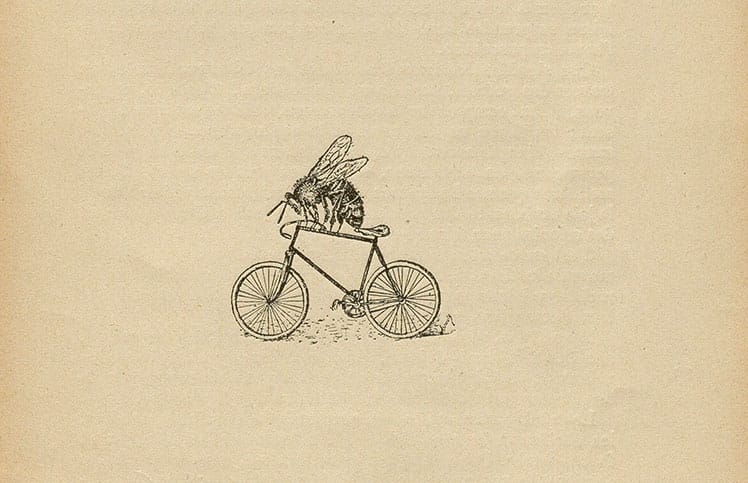
A bee on a bicycle, drawing from “Le calendrier de l’apiculteur”, C. Arnould, 1908.

European Public Domain Day: Call to Contributions 

We are thrilled to announce the opening of the Call for Contributions for the European Public Domain Day 2026! 

On the 15th of January 2026, we will celebrate the Public Domain Day at the Royal Library of Belgium, in Brussels. Together with Scholars, Advocates, Policy-Makers and Practitioners, we look at the Public Domain, and how we collectively can continue to protect it. 

The European Public Domain Day is a conference co-organised by COMMUNIA, Meemoo, Wikimedia Europe, Wikimedia Belgium, Europeana Foundation, Creative Commons, Internet Archive Europe, CREATE, the Royal Library of Belgium and Open Nederland & by the Community Members.

For the first time, the alliance has opened a Call for Contributions aimed at Professionals of the Cultural Heritage Institutions and Advocates to contribute to this day! We want to hear new voices, discover new topics and have a better representation of the activities all over Europe through lightning talks & presentations. This call only applies to the European Track for the afternoon sessions. 

Could this be you? Propose your lightning talks or presentations via this form

The Call to Contributions is open until September 30th 2025. 

If you have any questions, please, contact Camille Françoise 

🧭 Why This Matters

The European Public Domain Day 2026 is a crucial event for celebrating and advocating the Public Domain, by fostering creativity and access to knowledge. Uniting scholars, advocates, and policy-makers, this event aims to enhance efforts to protect and promote the Public Domain across Europe. The Call for Contributions invites professionals to celebrate and protect the Public Domain.

Celebrate European Public Domain Day 2026 Read Post »

AI for Public Good @PublicSpaces: From Hype to Humanity

Forget the dystopias and sci-fi. At this panel, the message was clear: AI, when done right, can serve people, not just profits.

“AI is applied statistics on steroids… with a serious marketing spin,” quipped Caroline de Cock, setting the tone for a no-nonsense, myth-busting panel on how AI can serve sustainability, culture, and society. She urged the audience to ditch the Silicon Valley glitz and look at AI like the Dutch polder model: “No one really knows how it works, but the dykes hold, and our feet stay dry.”

🔍 What Happens When Archives Meet Algorithms?

Jeff Ubois from the Internet Archive Europe Board delivered a wake-up call: the previously overlooked corners of digital preservation are now prime real estate for AI training.

“Archives have become relevant, not so much to humans, but to AI.”

He warned about the erasure of inconvenient data—climate, health, economic—being flushed down “Orwell’s memory hole,” while stressing the need for broad access to high-quality information to train AI in the public interest.

“Do you want your doctor’s AI trained on all human medical knowledge, or just what’s fully licensed and easy to access?”

🏗️ Build Public, Not Just Private AI

Ben Cerveny from the Foundation for Public Code flipped the narrative from tech disruption to tech integration. In his words:

“People invent things and call them technology. If they work, they become infrastructure.”

Ben’s vision? A future where cities, libraries, and schools have their own public models: transparent, accountable, and locally tuned.

“A public model should be a public asset—with governance, values, and sustainable funding baked in.”

Dr. Lucie Chateau speaks at AI for Public Good Panel – PublicSpaces Conference 2025: Shaping Our Digital Future – Photo by Lotte Dale

🌍 The Global Majority Needs a Seat at the Table

Dr. Lucie Chateau from Utrecht University’s Inclusive AI Lab stressed the importance of looking beyond Western AI narratives.

“90% of young people live in the Global South. They’re not just data points. They’re creators.”

She introduced groundbreaking work in building regional language models and ethnographic research showing how AI is being joyfully and creatively adopted across India and Africa.

🌱 Climate GPT: AI vs. Our Biggest Crisis

Then came Daniel Erasmus, who cut through AI hysteria with a clear call to arms:

“The peril isn’t AI. It’s climate change.”

He showcased ClimateGPT, a lightweight, renewable-powered model trained to help tackle climate adaptation and resilience. It’s already being used for everything from judging sustainability awards to helping map the impact of extreme weather in real-time.

“We don’t need smarter things. We need better decisions.”

💡 Takeaways

  • Archives matter not just for memory, but for justice and data equity.
  • Europe must build public AI infrastructure, not just regulate private ones.
  • Inclusion means participation: AI from and for the Global South is essential.
  • Climate tech can’t wait, and smaller, focused models are more sustainable and actionable.
  • System prompts = ethics by design: who should decide what your AI thinks?

As one audience member asked, could we one day replace politicians with AI trained on party manifestos?

“No,” came the quick answer. “But we can use AI to make better, more informed decisions.”

That’s the future this panel believes in: grounded, democratic, and just smart enough.

Check out the full recording of the panel here: https://conference.publicspaces.net/session/ai-for-the-public-good

The photo’s of the conference are online now on https://publicspaces.net/2025/06/25/fotos-van-de-publicspaces-conferentie-2025-shaping-our-digital-future/

AI for Public Good @PublicSpaces: From Hype to Humanity Read Post »

Protecting the Past to Power the Future: Internet Archive Europe Launches the Our Future Memory Campaign

Today marks a defining moment in the fight for digital rights in cultural heritage. From the shores of Lake Geneva, where minds have long gathered to shape the future of knowledge, Internet Archive Europe proudly announces the launch of Our Future Memory, a global campaign dedicated to safeguarding the digital rights of libraries, archives, and museums worldwide.

The timing could not be more deliberate. As we speak at the LIBER 2025 Annual Conference, surrounded by Europe’s leading library professionals, we are witnessing firsthand the urgency that drives this initiative. The “Four Rights for Libraries” panel session today, moderated by our own Jeff Ubois alongside distinguished speakers Justus Dreyling from COMMUNIA, Caroline De Cock from information labs, and Peter Routhier from Internet Archive, has crystallised what many of us have felt for years: the digital transformation has fundamentally altered the landscape for memory institutions, and not always for the better.

The Challenge We Face

While technology has promised universal access to human knowledge, many libraries today find themselves with fewer practical ways to fulfill their historic mission than they had decades ago. 

The shift from owning physical materials to licensing digital content has created an unprecedented crisis. License agreements routinely prohibit preservation activities that were once standard practice. Materials that exist only in digital formats often remain locked behind commercial platforms that restrict the very institutions meant to preserve them for future generations.

This is not merely a technical problem, it is a fundamental threat to the democratic principle that knowledge should be accessible to all, regardless of economic means or geographic location.

Our Response: Four Essential Rights

The Our Future Memory campaign centers on a simple premise: memory institutions must retain online the same rights and responsibilities they have historically exercised offline. To achieve this, we have articulated four fundamental digital rights:

  1. The Right to Collect materials in digital form, whether through digitisation, open market purchases, or other legal means. This includes content that exists only in streaming formats or behind platform restrictions.
  2. The Right to Preserve digital materials through backup, repair, and reformatting activities essential for long-term access. Without this right, today’s digital culture risks becoming tomorrow’s digital dark age.
  3. The Right to Lend digital content under traditional library conditions, maintaining the balanced approach to access that has served communities for centuries.
  4. The Right to Cooperate through sharing and transferring digital collections among institutions, ensuring that resource constraints do not create information deserts.

Building Momentum

The campaign has already gained remarkable traction. Since its initial signing in Aruba in April 2024, institutions across the globe have endorsed the statement. From the Netherlands Institute for Sound and Vision to the National Library of Serbia, from cultural organisations in Belgrade to public libraries throughout the Balkans, a diverse coalition is emerging.

This geographic and institutional diversity reflects a crucial truth: the challenges facing memory institutions transcend national boundaries and organisational types. The digitisation of culture affects us all, and our response must be equally comprehensive.

Why This Matters Now

The stakes extend far beyond library operations. Authors, researchers, journalists, and creators of all kinds depend on the sustained availability of cultural materials that only memory institutions preserve without regard to commercial viability. Future historians will judge us by how well we maintained access to the intellectual heritage of our time.

Join the Movement

Whether you lead a major research library or manage a small community archive, whether you work in policy development or daily patron services, your voice matters in this conversation.

We invite you to take action:

  • Sign the Statement: If you represent a memory institution or support organisation, visit ourfuturememory.org to learn about our verification process and add your endorsement.
  • Engage Your Community: Share this message with colleagues, board members, and stakeholders. The more voices we gather, the stronger our collective impact becomes.
  • Connect With Us: Follow our progress and join ongoing conversations about digital rights and cultural preservation.

From Lausanne today, we launch not just a campaign but a commitment to future generations. The memory institutions that have faithfully preserved human knowledge through countless technological transitions will continue to do so in the digital age, but only if we act with purpose and urgency.

Our future memory depends on the choices we make today. Join us in making them count.

Learn more about our work and the Our Future Memory campaign at ourfuturememory.org.

Protecting the Past to Power the Future: Internet Archive Europe Launches the Our Future Memory Campaign Read Post »

Scroll to Top